UX Had to Beg. AI Didn’t Even Knock

A Long, Long Time Ago

It’s 2013 in beautiful Knoxville, Tennessee and I’ve just been hired by a healthcare software company to build up a UX design team. The focus? Physician-facing and care team facing  applications and workflows. The kind of context where deep knowledge of how clinical users actually think and work isn’t a nice-to-have, it’s a requirement. 

Except that’s not quite what happened. Over the following months, through a series of smaller decisions and quieter conversations, the picture changed. The team never materialized and the role drifted. What they actually needed, it turned out, was someone to evaluate vendors and manage design relationships. An art director, something I had done before, pretty extensively. And yet…

The contextual knowledge that healthcare UX requires, the kind you build through research and iteration and repeated proximity to actual users? It got treated as a secondary consideration. Engineering was the center of gravity. Design just orbited it. I trained my replacement and left exactly one year after I started.

Two years later

At Siemens Healthineers, I’m sitting across from an engineering manager who has politely but clearly already decided this meeting is a formality.

We’re talking about PET scanner workflow software. The screens that a nuclear medicine technician uses to dial in radiation sensitivity, read radiological event data and confirm what’s been captured and what’s still pending. Heady stuff. 

The screens are all in black and white. Dense gray scale without much visual hierarchy. No color cues and no summary of present state. Just numbers and toggles that the technicians had been memorizing for years, because the alternative was slower.

I had some questions, and with tech constraints onboarded, I soon had upgrade proposals:  better resolution, colors to encode and depict radiation sensitivity ranges, a progress summary surfaced where it was actually needed and changes that would reduce the cognitive load in workflows where errors had real consequences.

The engineering manager looked at the mockups, and then at me, then back again at the mockups. “We’ll think about it,” he said.   That quarter, I ate a lot of catered lunches at my own brown bag events talking to engineers, clinicians and physicians as well as product managers, sales and marketing. 

Doing Reps – UX Adoption

Here’s what UX adoption actually looked like in that era, from the inside. 


Perhaps you were in a new practice trying to earn a seat at a table that had been set without you. Engineers and executives didn’t dismiss UX because they had evaluated it and found it wanting, but because it looked decorative. Soft and touchy-feely. The frou-frou department, one executive at another company once called us. (I’m not making that up.)

The resistance lived at the top and in the middle and the people with institutional authority were the skeptics. Which meant that one of the most promising paths forward was bottom-up proof. 

Meaning what? Patient, persistent and high-quality work that kept raising the bar. Usability testing session videos where engineers sat and watched real users struggle with interfaces they had built. HCI fundamentals explained in terms of sensory memory and visual processing, in the language of people who thought in systems. Brown bag lunches and hallway conversations. Prototypes that were better than anything anyone had seen before from a design function.

One full quarter of pursuing this at Siemens Healthineers and then…Then a YES.

Two companies, two shapes

They both circled the same problem: UX climbing uphill against institutional skepticism, converting the powerful through evidence they couldn’t easily dismiss.

There’s a documented failure mode worth naming here, one which Debbie Levitt wrote about in 2022 in UX Magazine: UX practitioners who responded to that skepticism by democratizing their work, running design sprints and workshops that invited everyone to “do UX,” inadvertently taught organizations that UX was something anyone could do. The tactics designed to build buy-in ended up hollowing out the credibility they were meant to establish. 

The ones who navigated it well held the line on expertise while still opening the door. Proof positive rather than participatory theater.

AI arrived differently

It didn’t send a calendar invite. It didn’t ask for a pilot program. The budget showed up first, and then the mandate. Then the all-hands where leadership explained that we were going to be an AI-forward organization, effective immediately, and wasn’t that exciting?

The resistance to this new influence flipped from technical and leadership to creatives and engineers in the trenches. 

We’re talking Design and Development, the people closest to the craft. Everyday users who had been handed tools they didn’t ask for and told to use them. These are the skeptics now. Not the executives, and not much engineering leadership. The people with institutional authority are already sold while the unconvinced are the practitioners.

Same adoption problem, with an opposing polarity.  So what does that reticence actually look like up close? Some of it is displacement anxiety, which is real and reasonable. Some of it is quality concern, also real. Some of it is ethical unease about training data, authorship, environmental cost. Some of it is something harder to name: the feeling that something is being done TO you rather than WITH you. That the conversation started without you and ended before you arrived. That last one sucks, doesn’t it?

Resistance Vectors

Here’s what I keep returning to… That the tactics that worked in 2013 were designed for a specific direction of resistance.

Brown bag lunches work when the VP needs convincing. They don’t work when the VP is already sold and your creative director is the holdout. You can’t mandate your way to bottom-up trust. And you can’t run a workshop that teaches skeptical practitioners that “AI is good, actually” without recreating the exact failure mode Levitt described. You’d be running AI evangelism theater, basically going through motions that signal organizational enthusiasm while building neither genuine capability nor genuine confidence in the people you most need to reach.

So what does the reverse playbook look like? I don’t think we have a settled answer yet, but some hypotheses are worth examining.

Proof by invitation, not assignment. Let skeptics choose their own first use cases rather than handing them one. The brown bag that worked at Siemens wasn’t mandatory. It was catered, which is different. People showed up because they wanted to, and left having seen something they hadn’t expected.

Honest failure visibility. Show where AI breaks, not just where it succeeds. Calibrated trust is more durable than converted enthusiasm. The usability testing videos that moved engineers at Siemens weren’t highlight reels. They were uncomfortable to watch, and that was a big part of the point.

Craft preservation framing over craft replacement framing. What does AI protect practitioners from, rather than what does it take? That reframe isn’t just spin, and more often than not it’s a more accurate description of what’s happening in the workflows where AI is genuinely working well.

Peer signal over executive signal. Who in the skeptic community is actually using these tools well, and are they visible? In 2015, the practitioner who moved me forward with engineering management wasn’t the VP. It was a senior engineer who had sat through a usability session and couldn’t stop talking about it afterward. Credibility traveled laterally before it traveled up.

None of these are prescriptions, and obviously the playbook for these tactics is still being written.

Next Generation Adoption Attitudes

One more layer of this problem is being built right now, and it’s further out than many folks are looking.

On a recent road trip, my teenager told me about AI at school. Compulsory exposure. Tools introduced without much context for why. Classmates who had concluded, from their first extended contact with AI, that it was something to be skeptical of or dismissed. Not because they’d evaluated it carefully, but because their introduction felt like something being done to them.

Sound familiar? The adoption problem isn’t just in current workplaces. It’s being reproduced downstream in a generation whose first impressions are forming right now. That’s a longer conversation and it deserves its own article. But it’s worth naming here: we’re not just behind on the current adoption curve. We may be behind on the next one too.

Wrapping Up

In 2013 the question was: how do you convince the people with power that this practice has value?  Well, we figured that out. Imperfectly and slowly, with more catered lunches than anyone should have to sit through. But we figured it out.

The question now is different. How do you build genuine trust with the people doing the work, when the people with power already believe?

I don’t think we’ve found the answer yet, but I’d love to talk with the bright minds working on it.

—–

#AIAdoption #AIAdoptionDebt #DesignOps #UX #Leadership #ProductManagement #EngineeringLeadership #FutureOfWork #NextGenerationTalent

Seeking The Real in an Artificial World: A Father, a Daughter, and the Midwest They Almost Forgot

A road trip from Tennessee to the Great Plains — eleven days, eighteen hundred miles, and the slow rediscovery of something you won’t find on screens. 


There is a particular quality of light in northwest Iowa in late May. It falls flat and wide across fields that stretch to the horizon without apology, past farmsteads that have been slowly disappearing for a generation.  The groves of trees that once marked where families lived, the outbuildings and modest houses, mostly replaced now by industrial metal structures and unbroken tillage. It is a landscape that has been rationalizing itself for decades, quietly trading the human scale for the efficient one.

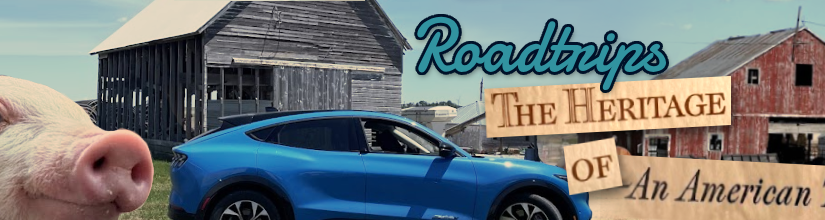
Richard Lee drove through it with his almost-sixteen-year-old daughter Coraline in a 2022 Mustang Mach-E, an electric vehicle that required them to stop every 220  miles or so and wait. 

The waiting, it turned out, was much of the point.


Departure

They left Knoxville, Tennessee on May 22nd with a route planned through Nashville, Indianapolis, and across Iowa.  Ames first, then Alta and Storm Lake and finally up into South Dakota to Brandon. The stated purpose was family: Richard’s father’s side in Ames, his mother’s side scattered across northwest Iowa and the Dakotas. Extended family he hadn’t seen in years. Cousins who had never met Coraline, or had met her only as a small child and remembered nothing.

The secondary purpose was harder to name, but both of them sensed it. Something had shifted in their lives: a job loss, a year of high school and shared organizational chaos before that. A household that had been running on fumes and habits. Richard had been examining his patterns, the things he did on autopilot, asking whether they were actually serving him. The trip was, among other things, an experiment in presence.

What neither of them anticipated was that the most significant conversations would happen not at any destination, but in the car, in the charging stops, in the unhurried hours that an EV road trip imposes on its passengers whether they want them or not.

There is something that happens on a long road trip that is difficult to replicate by other means. The car is a bounded space, and bounded spaces change what people are willing to say. There is no exit. There is no other room to go to. There is only the road ahead, the music, and the person next to you.

They shared music. Coraline exposed Richard to more of Harry Styles than he’d heard before. The first and fourth albums both genuinely good, they both agreed, surprising them a little. Richard introduced her to Depeche Mode’s Violator, The Cure’s Disintegration, Nirvana’s Nevermind, Led Zeppelin II. She listened without irony, which is its own kind of gift from a teenager.

They disagreed, sometimes sharply. They kept talking anyway. True conversation is a lost art, and they practiced it without fanfare.


The AI Conversation

It started somewhere in Indiana, before they even crossed into Illinois. Coraline brought up artificial intelligence, or perhaps Richard did, it’s hard to remember now. Within minutes, the conversation had sharpened into something neither of them had quite said to each other before.

What Richard heard, listening carefully, was that her generation encounters AI almost exclusively through its negative expressions: the environmental cost of data centers, the displacement of workers, the degradation of learning. She had watched her mother struggle to find work for two years. She had watched classmates use AI to complete assignments without understanding what they’d ostensibly written. She had drawn a conclusion, one that was careful, considered, and firm.

“You had your whole life of learning things the old-fashioned way,” she told her father. “I want that too.”

It was hard to argue with. Richard, who has spent his career at the intersection of design, technology, and product, had pivoted through roles in ways that required him to rapidly absorb new domains and build mental models of unfamiliar systems. He had benefited precisely from having had to do the work himself. The pattern recognition, the cross-domain intuition, the ability to walk into a new environment and quickly identify what was the same and what was different: all of that had been earned, not automated.

He didn’t push back. He listened, and then he said: I hear you. And he meant it. Inside, the shockwave of her simple, heartfelt words rocked his world. Outwardly, dust from the cornfields suddenly made his eyes water, despite closed windows and an excellent cabin filter.

The conversation didn’t end there. It reopened later, more gently, after a period of silence in which Coraline put in her AirPods and read. Richard noticed his first instinct had been to take the withdrawal personally. That’s RSD (rejection-sensitive dysphoria) — the ADHD tax on ordinary human withdrawal  — but instead of reacting, he waited. Later, he approached her: I wanted to clear the air. From my perspective, it seemed like you pulled back. But it might also be my RSD talking. What was your take?

She appreciated being asked. They talked again, and somewhere in that exchange, something changed in the timbre of their relationship. In the willingness to name his own cognitive wiring without making it her problem, and to come back with curiosity instead of defensiveness. She was becoming an adult talking to another adult, one that cared deeply. But more importantly, to an adult who was truly paying attention.


Ames: The First Layer

Ames, Iowa is a college town built around Iowa State University, flat and orderly, with a particular Midwestern earnestness about it. Richard was born at Mary Greeley Hospital there, and Coraline had tracked it on the map before they arrived to make sure they passed it. She was right that they would.

They stayed at the house of Tom S. and his wife Erin P., cousins on Richard’s father’s side, who were away camping with neighbor friends for a couple of days. Richard walked through the house noting the accumulated stuff of life: music gear, tech gear, camera gear, books, workout logs, cobbled furniture, board games. The precise texture of a certain kind of mind. He thought: We are so alike in so many ways. I wish we lived closer.

Donna B. was waiting when they arrived. She was one of his father’s side of the family, a woman who volunteers at a local food shelter and knows where everything fits and why. They talked for nearly an hour after she helped carry things in. Richard said afterward that it was the first ‘real talk’ adult conversation he could remember having with her. She told him things about the family he hadn’t known: about his father and mother, about his grandmother, about the texture of relationships that had existed before he was old enough to notice them.

The next day was Memorial Day. Dick and Linda hosted a cookout at their home on the edge of Ames. Anna cooked everything herself and organized the day. Her children Juno, Ren, and Dax were there along with Dylan, Amy’s five-year-old. Along with Dax, he spent much of the afternoon demanding airplane rides from Richard.  Coraline was “kidnapped” by Anna and the kids and didn’t seem to mind at all.

Richard had a meaningful conversation with Anna’s eldest, sharing that he was neurodivergent and that he had come to understand his neurology as differentiation rather than disability. More of a different cognitive architecture with genuine strengths, not just a deficit to be managed. They received this quietly, in the way of someone who has been told many things about themself and are carefully sorting out which ones feel true.

Later, at Amy’s house, while digging in the soon-to-be garden Amy was working on, Richard briefly crossed paths with D, Anna’s husband. He was navigating his own recovery, doing the particular hard work of untangling childhood trauma from the person you’ve become. Richard recognized the territory. Neither said anything about it. Sometimes recognition is enough.

Inside, Coraline and Dylan were finding their home towns on a giant map on the wall as Dylan earnestly fumbled for the words to coordinate their exchange of contact information.


Storm Lake and Alta: The Roots

The day before leaving Ames, Richard stopped in to see Donna at the food kitchen where she volunteers, and a place she clearly belongs, moving through it with the ease of someone who has found a way to make her presence essential. He met her coworkers. He gave one of them a keepsake from the road, the retired gentleman who happened to share his name. There was a brief moment of recognition between two Richards with only the name and a morning spent helping others in common, and both of them appreciated it.

That afternoon, Richard and Coraline joined Dick, Anna, and the kids at Peterson Pitts, an outdoor swimming hole carved from what was once a gravel quarry, with water that reportedly reaches eighty feet deep. They swam, laid out, talked. Eventually the group thinned, and Richard found himself alone with Dick at the edge of something that needed to be said. They talked about Linda. Dick spoke about her dementia as though it were fairly recent. Richard, who knew Linda’s kids had documented signs going back to 2018, said nothing about the gap. Some things you absorb and carry. The afternoon Iowa light and cool winds set the place aglow and hinted at wilder lands.


The northwest Iowa landscape opens further as you head west, getting flatter and more exposed, the sky a larger presence. Storm Lake sits in Buena Vista County, surrounded by farms that have been in families for generations and a few that haven’t managed to stay that way.

Richard’s cousin Kurt E. farms a spread in the area. He’s  younger than Richard by about six years, and carries the particular competence of someone who grew up watching this land worked and then took over the job himself. Heidi, Kurt and Leah’s younger daughter, gave Coraline a tour on a side-by-side utility vehicle with the casual competence of someone who has been doing this since before she could reach the pedals. Later, on a different farm, a five-year-old boy would ferry her around on a four-wheeler with one hand. By the time Richard suggested she take the wheel of the Mach-E on a few miles of gravel road outside Alta, her threshold for what constituted alarming had been substantially recalibrated. If a kindergartner could manage livestock transport on a motorbike, she could manage a quiet stretch of Iowa gravel. She was right, and did fine. Of course she did.

Heidi wants to be a park ranger. Not generally, but very specifically. A particular park, a particular office, a particular desk. She showed Richard her room, which she has filled with Smokey the Bear memorabilia with the completionist’s attention of someone who has decided and committed. Richard was struck by the particularity of it. The clarity. The absence of hedging. Her older sister Hanna has been deep in FFA and 4H for years and is thinking about physical therapy and rehabilitation for children. Two sisters, two fully formed trajectories. Something in the household had given them permission to know what they wanted.

Kurt also solved Richard’s charging problem with the practicality of someone who has been improvising solutions since before machines could learn. After they’d confirmed the 220 solution worked with Richard’s charging hookup, Kurt ran to the machine shop and came back with a 220-volt adapter taking four prongs to three prongs, that fit the nearby original family farm’s existing RV connection at Bruce’s place. By 4 AM that night, the Mach-E was fully charged, plugged into a wood scaffolding between the old grain bins. It drew power from the same farm electrical system that had been running equipment for decades. No dedicated EV charger or subscription fees required. Adapt and proceed. 

The farm tour with Bruce (Richard’s uncle on his mother’s side) covered ground both literal and historical. Bruce has been adding to and modifying his farmstead for decades, designing a home expansion in his head during long bus drives for church groups and youth sports, working out engineering problems over years before putting a single nail in. He built the massive garage-and-great-room addition in stages, tearing out rafters once the plan had grown beyond its original scope, rebuilding ceiling structures on his back with barely enough room to work, adding a pocket door that necessitated a wall extension that necessitated a storage nook that turned out to be exactly right. A pantser, Richard called him. Flying by the seat of his pants.  Bruce laughed. 

Walking through it, Richard kept thinking: this is where I come from. This is where I get it. The perseverance, the patient dreaming of what a thing could become, the willingness to tear out and start again when the plan had grown. All of it recognizable, transposed into a different register of design and technology and product. Midwest farm logic applied to urban problems. It made him feel good to see the source of it. Maybe he understood his current challenges a little better. 

Coraline held a three-week-old piglet on the old family farm. She was glowing, much like Richard and his sister Kirsten once did.

Diane put on a traditional Iowa meal: corn cut fresh from the field and fresh from the freezer, coleslaw, potato salad, bratwurst, pork burgers, watermelon, Jell-O salad. They ate on the back deck in mild weather, talked family history until the sun went down, and called it a night. 


South Dakota: The Furthest Point

Sioux Falls itself, and Brandon, South Dakota (just east of Sioux Falls) sit on the edge of the Great Plains proper. The landscape shifts as you cross the Big Sioux River, with the gentle Iowa roll giving way to something harder-edged, more Rocky, with outcroppings that feel like a preview of the West. Richard woke Coraline up at that crossing. She stayed awake after that. 

Hope, Jenny’s daughter, was visited first, and her house was a genuinely lovely space that could have been featured on HGTV. Her husband Josh is a professional painter whose work was visible in every room, their two boys Parker and Calder providing the particular ambient energy of a two-month-old and a very alert two-and-a-half-year-old. He’d already catalogued the satellites visible above the backyard and corrected his grandfather’s pronunciation of a friend’s name with patient precision. These were the youngest of the 20 cousins Coraline “collected” on the trip.

Jenny D., Richard’s cousin on his mother’s side, lives in Brandon with her husband Neil and their son Griffin, the older kids having already fled the coop.  Richard hadn’t seen her in years. She is one of the people he’s felt most connected to in the family, and the visit reforged that connection. They talked late into the night, first sitting in the Mach-E at a Pilot Flying J charging station while the battery crept up from low, and later on Jenny’s back deck overlooking a sizable creek. They stepped through the things that don’t get said in texts or holiday phone calls: what actually happened those summers long ago when Jenny stayed at the farm, what her childhood had really been like, and what she and Richard had each gotten wrong about the other’s experience. They engaged with each other’s false perceptions and gave them up. It was cathartic, as these conversations tend to be when they finally happen, and worth broaching after years of delay.

Neil shared about his ADHD diagnosis the previous year. These things often come later in life, with the particular reverberating quality of a late diagnosis: everything re-examined through a new lens, years of confusion suddenly making sense. Richard shared he’d be happy to talk about it with him. Neil’s experience as a pastor at his church, a large, conventional congregation that had responded poorly to his diagnosis, was the kind of institutional failure that is hard to describe without sounding like you’re exaggerating. Jenny seemed bitter about it. Richard was not surprised. He’d borne the brunt of coming out to institutions in recent years, and still bore the scars. 

Griffin and Coraline stayed up talking until 1 AM, in the same room, in the same positions Jenny and Richard had left them in, apparently finding in each other some similar frequency. The next morning, the olds regretted the hour slightly, but no one regretted the conversations.

Janet and John came to dinner. Games were played, and there was much laughter. Also ice cream and cake, because “midwest sweet tooth” is a genetic condition. Richard walked them out to their car afterward and they talked about the improvement in a family member’s behavior over the last year and a half: more communicative, more present, more connected to their family. This reminded Richard of Tom discussing having seen signs of his mother’s dementia. The two conversations, days apart, sat in Richard’s mind like photographs taken from different angles of the same subject: distance and its impact. 


Des Moines: The Big City

“AI is like fire,” Richard told his uncle Ed D. during a conversation they had while once again charging the EV in Des Moines.  Their discussion had wound its way from tech support to family history to the future. “It’s an elemental force. It can be an amazing tool but it can also be incredibly destructive. You have to decide which, and work to make that the reality.” Ed agreed, in the pragmatic way of someone who has seen enough of the world to know that elemental forces don’t wait for your opinion. “It’s turtles all the way down,” Richard added. Terry Pratchett. Ed appreciated it. Charge complete, they headed back to the house. They found Coraline and Richard’s aunt Joan going through old family photo albums, two of which made it back to Knoxville. 


That night everyone local met at Christine and Brandon’s place for dinner and a swim in their pool. Izzy (cousin #20 !) and Coraline hit it off, future pen pals most certainly. 

The next morning Ed and Joan fed Richard while Coraline slept in, before packing for the outbound trip began. Joan made espresso and they talked about Steve, their son that died 14 years ago.  The day following our visit was his birthday, and they were having an annual birthday party in his memory – sixty people – classmates, parents of classmates, friends who became friends through grief. A kind of testament to what can grow from loss when people choose to tend it.  Faith, family, friends and the church community are a big part of it for them. 

Richard was grateful they shared the story, and realized that the sharing itself allowed a long-forgotten wound of his own to heal. It shed light on how parents can deal with grief of that magnitude – something he’d struggled with since having kids of his own. 


The Thing About Screens

At some point during the trip, somewhere in South Dakota with good company around and no particular reason to reach for a phone, Richard realized he hadn’t opened his laptop once. He had barely used his phone for anything except navigation and coordinating logistics. This was not a digital detox in the performative sense. It was simply that there was too much else happening. More meaningful stuff. Real stuff. 

The families he was visiting were not living in opposition to technology. They used it, navigated it, struggled with it when it stopped working (Richard spent a notable portion of one afternoon doing tech support on a password recovery issue, his interface-specialist instincts fully engaged). Technology was instrumental there, but in service of lives organized around land and seasons and relationships and the practical accumulation of skill. 

What the trip made visible, by contrast, was how much of ordinary life has become organized around the screen as a destination rather than a tool, the thing you go to when there is nothing else. Increasingly it’s the thing you go to INSTEAD of something else. The data centers are multiplying across Indiana farmland and smaller cities, visible from I-65 and impossible to miss. The scale of them feels wrong in the way that only becomes obvious when you’re driving past at highway speed. They’re simply the infrastructure of that orientation made physical. 

The family in Ames talked about them too, in the abstract: entire sections of land that once held multiple homesteads now holding monolithic industrial structures and nothing else.


What Comes Back

They drove home through Des Moines, and back through Ames for one more night with Tom and Erin and their kids. There was a workout in the basement, a late night conversation, and Coraline and the kids picked up exactly where they’d left off. 

Indianapolis was a different story. Ford’s navigation system, blissfully unaware of construction that had closed multiple exits and rerouted entire roads, nearly guided them into an accident. Richard pulled off onto side streets and into a mall parking lot, took a beat, spotted a police cruiser, and rolled up slowly with windows down and a friendly wave. The officer helped them find their route to the hotel. Richard gave the cop a blue mug in thanks. He mentioned to Coraline afterward: this is what that interaction looks like from a position of privilege. The acknowledgment mattered. She heard it.

Then south and east through Kentucky instead of Nashville. That shaved an hour or two off the return and offered the particular pleasure of horse and bourbon country in late May.

By the time they got back to Knoxville, something had shifted. Not dramatic, not cinematic. More like a recalibration, and a reminder that the people on the other end of a phone number are living full lives in places with real textures. That texture is only available in person.

Richard came back having not had a drink in eleven days. He wasn’t a problem drinker but he was a regular one, consistent to a fault. He had slept in hotels, in guest rooms in the homes of people who knew him when he was young, and he hadn’t felt the desire at all.  He did wake up with a headache some mornings and figured that was likely related. Those were managed with aspirin and coffee. He took it in stride and noted how he felt more present.

Coraline came back having held a piglet, having driven on a gravel road, having met 20 new cousins who became real to her in a way that photographs on a phone screen had never managed. She came back knowing that her extended family, distributed across Iowa and the Dakotas, living full, strange and interesting lives was worth knowing even more than she had understood.

They did not go to Paris or Patagonia. They drove through Indiana and across the flat spine of the Midwest, stopped at truck stops and Meijers, slept in guest rooms and ate Jell-O salad. They visited people who remembered Richard as a child and met Coraline for the first time. They charged an electric car from a grain bin. They swam in a flooded quarry. They were licked by baby cows and made a fainting goat actually faint. 

And somewhere in all of that, between time in the car, in the kitchens and on the back decks… As the sun went down over fields that have been planted and harvested for hundreds of years, something real happened. The kind of reality that a cruise ship or a European itinerary cannot manufacture. The kind that requires history, and people who share yours, and enough unhurried time to actually say the things you’ve been meaning to say.

There is a persistent cultural myth that the trip which changes you must involve a passport, a long-haul flight, and photographs in front of something ancient or impossibly scenic. That this transformation requires distance in geographical, cultural and linguistic terms. That you have to go far to go deep.

Richard and Coraline drove to Iowa. 

It’s Users All The Way Down

Sometimes in the process of defining your users, you’ll discover that, much like turtles, there are layers upon layers of them just waiting for their stories to be told.

Background

Joining a company late in 2014 as their new UX professional (and founding member of a growing team) has been an eye opening experience. Not only have I been able to finally practice what I’ve been preaching and learning the last few years, but I’ve been exposed to the healthcare industry – which is entirely new to me. Tons to learn = tons of fun.

Anyone in experience design must carefully consider their users’ goals, circumstances, capabilities and habits. This is one way for us to get out of our own heads and as far into our users’ heads as possible – avoiding the trap of designing for the users we’re most familiar with: ourselves.

Identify the users we’re serving is a great place to start. This sounds simple and it can be – but it can also be a complex puzzle (with all the edge pieces hiding and the corner pieces eaten by your dog.)

What my company does

At a high level, we provide a secure and efficient communication platform for the healthcare industry. The platform helps patients, practice staff and hospital staff efficiently contact physicians.

The problems we solve:

  1. handling the bazillion ways that physicians within a hospital or practice setting need to be contacted depending on situational context.
  2. sending information to a physician in a way that is secure and does not violate laws around the privacy of protected healthcare information (PHI).
  3. maintaining a fine balance between the needs for privacy and accessibility on the part of the physician.

Who are our users?

User (Turtle) #1: Our external users

This group includes doctors, nurses, acute care staff and hospital / practice management. They’re the obvious answer to the ‘who is our user’ question – the system was designed to meet their needs and everything revolves around maintaining and enhancing the capabilities that our platform extends to them.

If we push out a buggy feature or misjudge the utility of an enhancement and sacrifice something more vital, these are the people who feel it the most. We should be in close contact with representative members of this group, testing things out and gathering feedback constantly. This group will (and should!) receive the highest prioritization when it comes to evaluating features, to doing user research and to planning and executing usability testing. That said, don’t stop here!

User (Turtle) #2: Patients

Our healthcare professionals are themselves serving another group of users: their patients at member hospitals and practices across the country. These are the folks that our external users are under oath to care for, and who they went to school for a dozen years to serve.

This is the group who pays the price for inefficient communication practices. It’s the folks who have seen their premiums and deductibles climb year after year and who in too many cases don’t have insurance at all. They pay dearly for any healthcare they receive. This is you and me, when we visit our family doctor or when we land in the emergency room after falling off the roof in an ill-advised attempt to save money on chimney repair.

While we can’t prioritize designing for this group over the others, we should always consider the impact of our decisions on these people.

User (Turtle)#3: Internal Users

We have another group of users not immediately obvious to the naked eye: our internal users. These are the folks that use a suite of applications to onboard new external users and that support their needs on a 24/7 basis, 365 days a year.

They don’t use the exact same set of tools as our external customers, but they’re touching the same data and hitting the same systems. Their needs are also much more diverse since they service every type of external user and must become experts in the task flows for those users. This is no small feat, as the training required for these folks to become proficient runs from a full week to a staggering 3 months.

When considering the needs of this user group, striving to avoid introducing further complexity is a big priority. Beyond that, a large part of your backlog might revolve around taking steps to reduce that complexity even further (and therefore lighten the cognitive load of using the system).

If you’re in this situation, your company’s bottom line could be affected nearly as much by internal facing changes as it is by changes that affect your external users.

User (Turtle) #4: Executive Team

You’d think we had all the bases covered, but there’s actually one more group of users to touch on. Let’s call it the owner/executive team, made up of company ownership and senior leadership in both your external users’ companies and your own organization.

The goals and tasks of this group tend to be pretty straightforward, and sometimes seem pretty far removed from what the other three groups of users are concerned with. That said, while I don’t recommend placing too much weight on designing for this group, I do believe it’s a mistake not to consider their needs. Pulling off a win-win effort that enables this group to hit their goals tends to be a self-reinforcing success for a company.

Wrap Up

If you only take one thing from this article, know that accommodating anything less than every group of users in your designs is a Bad Thing.

Imagine that your executive team has seen the effect that your team’s UX design and development work has had on the bottom line – and so they foster a culture that values and encourages such efforts on an ongoing basis. This belief is folded into the company’s core values, and soon the sales, support and product development teams are all on the same page.

Your external users consistently see improvements, enjoy using your product and feel that their feedback is valued and acted upon. Inevitably these happy professionals pass those benefits on to their own customers . For our patients user group that manifested through cost savings, less time in the waiting room or waiting on a surgery date, and better quality of care.

Your internal users don’t have to jump through hoops to support the customers since the support tools they have been given are performant, intuitive and easy to use.

Wouldn’t that be a beautiful place to work? Are you ready to make it happen?

Design Constraints Are Awesome

While reading some material recently I was particularly struck by a correlation between the sentiment of “designing for monochrome first” (for color deficient users) and the design movement termed “Mobile First”.

In both cases, the designer aims to build their interface elements such that the largest % possible of users will have accessibility to the data, based on the real and perceived limitations of the environmental factors imposed. After baseline accessibility and usability you can worry about nuances and aesthetics.

Monochromatic vision strips the designer of color-based tools and techniques, forcing you to fallback to the use of shape, contour, contrast and pattern. The Mobile First design sensibility forces the designer to carefully prioritize what elements of the design are truly needed to accomplish the goal(s) of the product, framed within the limits imposed by a smaller display. You also have to consider the contextual differences in usage between a mobile device and a desktop computer, and within the vastly different feature sets of modern devices.

I often hear about project constraints in terms of drawbacks, of obstacles to building the perfect widget. It’s much more helpful to think of constraints as helpful wayfinding elements on the road to successful project definition. If you know what they are, you won’t waste time in rabbit holes and you’ll be able to focus your time and attention on crafting the best product possible – one that will meet the unique needs of your users, whether or not they can see colors and regardless of what they’re using to access your offerings.

Thoughts On Medical Decision Making

Original article by Jerome Groopman

We all fall victim to habitual behaviors, and more so when we are unable to focus sufficient attention on tasks at hand, believing (consciously or unconsciously) that we can accomplish some process or task without conscious thought, instead thinking about ‘more pressing’ matters.

What is more difficult to detect are those biases not based on habit, but instead on other factors. Groopman’s article on medical decision making explored this issue in the light of decisions made every day by physicians in practices and hospitals across the world.

Several types of errors were explored, including Representativeness error (thinking that is overly influenced by what is typically true), Availability error (the tendency to judge likelihood of an event by how easy relevant examples come to mind), confirmation bias error (cognitive cherry picking – confirming what you expect to find by selectively accepting or ignoring information) and affective error (making decisions based on what you wish to be true).

The stories he shared demonstrate how a very skilled and educated doctor can make incredibly dangerous mistakes, due in some cases to the fast-paced world of medicine but in other in reaction to common human urges such as the desire to be merciful and spare a patient embarrassment or further fatiguing tests.

At my workplace we are tasked with making medical industry communication more secure and much more efficient – resulting in better patient care and increased physician and clinician satisfaction. After reading this article and having learned a great deal about how complex the communication needs of a hospital or practice have become, I have to wonder how many mistakes are made due to the very real problems of workflow dissolution and workplace communication breakdowns. How many errors of the classes described by Groopman could be avoided or reduced in severity through more frequent and higher quality peer-to-peer interactions in the medical industry?

Notes from GiantConf 2014′s “Building a Whole Team UX Design Team” presentation by Phillip Hunter

In his presentation on day two of GiantConf 2014, Phillip Hunter talked to us about “Building a Whole Team UX Design Team”. Here are my notes from his talk.

Phillip Hunter – Building a Whole Team UX Design Team
@designoutloud
http://www.minotaurdesign.com/blog/wp-login.php

His belief is that in the UX community, team building is much like early days in baseball scouting.

The focus on stereotypes:
on rock Stars in the industry…….
(is that a person w/ diseases and who trashes hotel rooms? lol)

On Ninja’s….
(is that the person who kills people in the night? lol)
Focus on design mishmash – (beanie/knit cap and glasses, lol)

– Stereotypes don’t help us build better UX teams. Avoid them.

(slide of the major pieces of most companies) – All these people are ENABLING the user experience.
– most of us are in Product development team.
– so it’s silly to think of one small piece of the org as wholly responsible for the UX of a company

4 primary capabilities (as a grid):
– engineering leading technology
– maintaining strong teams
– running a successful business
– enabling great experiences

The practice of creating experience is a SERVICE – look to service design for cues

Strategy means defining and inspiring before hiring

Hiring a dev, designer, tester because you need to developer, design and test is premature.

Context + capability to help you know the best way to create that holistic UX mindset.

OAQH- Orient, Assess, Question, Hypothesize

Setting the team-building CONTEXT:
– what are our goals, values, constraints and principles as a corp?
– what do we need to get done?
– why?
– how much/how fast?

Setting capability requirements:
– What do we need to be god at?
– How good? How will we know?
– What are our priorities?
– Not who…. (yet)

Liz Bacon’s infographic on her definition of user experience design
– pie chart of sorts
– ranked herself within each facet

Building effective structures within the company:
– Complementary strengths vs homogeneous development
– Breadth and depth of skill across people
– Increase participation

Beyond hiring and skills:
Shape align and inform with biz goals
Aim for impact, scope, scale, diversity, resilience, sustainability

Crazy list of necessary skills (all of which mapped back to the grid of 4 above)

Atomic elements of necessary high level skills

Have the right project members been identified?
In what areas will augmentation be the best thing?
What kind and from where?

Building Your list of necessary Skills
Skill name
-skill 1, 2, etc becomes `> color, line, shape 2. Latent need identification, ebrand integration, prototyping, etc.

Gathering list items:
Ask your UX leaders and ICs, your UX enthusiasts, your Product owners, your Execs and sponsors.

(ranking 1-5 etc)
Skill name – Current Level – Desired Level – Priority
– – – –
– – – –

Perceived skill gap
– gap value on its own wasn’t that compelling/illuminating
– Gap value multiplied by Priority – this really surfaced the true GAP in context

Conversations that can come out of the above types of analysis?
Who does that already?
How can you get them involved?
What do your colleagues want to be good at?
X is how we need to craft our job description for HR!!!

sixboxes.com
framework for aligning people’s desires with their roles, and ultimately their ideal internal path that also benefits the company

– issue challenge to add UX to everyone’s job
– Let people find their point of contribution

HIRING (since sometimes you just have to…..)
– understanding and implementing the strategic framework from above
– involve the team to determine fit and talent
– Hire the inspired

Phillip’s slides (Thanks, Phillip!) – http://www.slideshare.net/philliphunter/building-a-whole-company-ux-team

Notes from GiantConf 2014′s “Embracing the Suck” presentation by Chris Harrison

In his presentation on day one of GiantConf 2014, Chris Harrison talked to us about “Embracing the Suck”. Here are my notes from his talk.

Chris Harrison – Embracing the Suck – 10:45a Thursday, June 12

@cdharrison
cdharrison.com

Embracing the Suck: Military phrase meaning to make the best of whatever situation you’re in..

Background:
– Weight loss – 529 to 377
– weight gain due to being depressed, hating what he did, etc.
– Making sites since 1996.
– Former fulltime freelancer
– now: frontend dev for Morris Communications (magazine division)

2013 state of the workplace
30% engaged and inspired
18% actively Disengaged – sabotage their coworkers (cost 450-550 million a year)
52% permanent case of the mondays – do just enough not to get fired

Sometimes you just gotta suck it up.
– Consider the alternative – it could be worse.

– dan willis, “great takes work”
– choose your battles and spend your energy wisely

Negativity is a cancer! (this could be a talk topic!)

Sometimes complaining takes more effort than just getting things done.

Don’t fear new. New = opportunity. (he was told he’d be doing all joomla and drupal work. This was not happy news)
– learn on the companie’s dime
– doubtful he could have learned this stuff as a freelancer (no time/money in it)

Everything you do is a learning process for everything.

– thomas edison’s quote about opportunity and how it looks like work.
– fabio at mailchimp, lead html email designer. was hired to do ui/ux, but they approached him to do HTML emails.
– we know as an industry that html emails suck.
– when he heard this, he embraced the challenge.
– 5 years later he’s an innovator in a field where it was thought there was no room for innovation left.

Opportunity opens doors…

Help your team…
– concept of jumping on hand grenades (someday you’ll need help from the person you help today)

Small wins are still wins. (make it something awesome despite the scope)

Make learning a priority
– learning about sass etc and givng talks about it.
– things suck less when you share what you know with your coworkers
– codeschool etc. as good options for continued learning.

“Sneak” new technology/techniques into projects, but strive to get buy-in from your coworkers (if not management)
– Demonstrate the benefits of incorporating these new techs into an existing workflow

Find creative outlets
– draw more.
– starting doing illustrator avatars for friends
– take pictures! (vader, ninja turtles)
– lilvaderadventures tubmler

Scratch your own itch – side projects rock
– itembrowser.com – his first responsive project
– learned media queries, etc.

Start using your powers for good
– jingle jam (10k) benefiting safeHOMES charity
– design + development + marketing
– someone could really use your talents!

Happiness depends on ourselves – aristotle
Even sucky work can make you happy. Give it a chance.

Reorgs: Rocky or Righteous (Designing the Experience of Company Transition)

As designers, we grapple every day with challenging projects. This of course is part of what keeps us coming back. Some challenges, although not directly related to project work, can still be looked at through a UX lens. In this case, I’m talking about a phenomenon you’re likely familiar with: company reorganization.

If you’ve been through a reorg (that’s ‘Reorganization’ in water cooler parlance)you’ve probably experienced your share of the whispers, closed-door meetings and mixed messages that seem to be par for the course when an organization goes through major changes in size, scope, staffing, or management.

I’ve been through a number of these shuffled decks myself, across several companies, and for a variety of reasons. It’s fair to claim that each one is different, but there’s enough overlap to identify patterns and form some baseline recommendations.

If you’re in a role with decision-making authority, then you’re ideally positioned to ensure that the reorg will be designed as an intentional experience with its actual user base in mind.

However, if you’re like the majority of us who aren’t in a position to make decisions about the reorg, you’re probably still reasonably close to the folks who are. Why not take the initiative and lay out some scenarios and recommendations for how the reorg can be designed for optimal reception and impact on your organization?

The users

Whether it’s planned or not, the scope of the reorg will have an audience far larger than the group of people seemingly affected on paper. The experience of these groups throughout the reorg should be purposefully designed by whomever is running the change management show.

Let’s take a look at who your users are.

  • The folks who are officially part of the reorg. Their status is changing in some way, be it their actual role, reporting structure, and the like.
  • Coworkers/teams who have direct or dotted-line dependencies with anyone or any team directly involved in the change.
  • Coworkers/teams whose only connection is physical or cultural proximity or who ultimately report to the same upper management.
  • Third party vendors who communicate with or provide services to reorg-affected parties.

Here’s what you need to realize: These groups will be getting bits and pieces of news about the reorg whether or not you craft that message explicitly.

With that in mind, you should ensure the messaging supports the business strategy, is accurate, and speaks to each party’s specific concerns.

This is the difference between an unplanned, unpredictable experience and an intentional, designed experience. It’s a golden opportunity to show your stakeholders they are a valued part of the organization, and you’ve got your arms firmly around managing the changes. If the right preparation goes into the reorg, you can nip in the bud any misinformation and unnecessary stress, building confidence in your team’s leadership and capability as a whole.

The alternative is to risk spending what trust currency you’ve accrued to date.

The message

Now that you know who you’re talking to, what do you say? It’s idealistic to think that you’ll know all the details when you begin planning the reorganization–but you do need to initiate your communications plan as close to the start of planning as you can.

Start by crafting general messaging that indicates the why–the logic being the necessity and desired benefits of the reorg. This should be high level until more details are known. If you know enough about the how to paint a low-res picture, do it.

A little bit of information that’s transparent and honest will go a long way–but take care not to make promises you can’t keep. Things can and will change, so own up to the reality that dates and other details are very much in flux to help you avoid having to take back your words when deadlines shift down the road.

As you approach major milestones in the reorg process and as the details solidify, provide appropriate communications to your audience groups–and do so again once the changes have been rolled out. This may seem like a lot of effort, but rest assured your people are asking questions. It’s up to you to address them proactively.

If a milestone date changes–and it will–the audience who’s been paying attention will still be looking to that date unless you update your wayfinding (in the form of project timeline communications). Without this careful attention to detail, you’re sharing bad information–perhaps more damaging than no information at all.

When the rubber meets the road

Inevitably, one question that will come up repeatedly throughout a reorg is “When does all this actually happen?” In other words, when do we start following the new processes, change how we route requests, start doing this and stop doing that?

For both logistical and psychological reasons, knowing how and when transitions will take place is vital. Often the difference between a stakeholder being stressed out

(perhaps becoming a vocal opponent of the changes) versus being calm and confident is the company’s honest commitment to consciously bridging the transition with trained, capable support.

This could be as simple as a window of time during which existing persons or processes can continue to be called upon for support or as complex as an official schedule that shows specifically how and when both the responsibilities AND expectations of the audience segments will change.

Usability research

It’s not like you can do A:B testing with a reorg. You can, however, do some polling when the initial reorg information is shared, then midstream, and again after the reorg is complete.

Why do this research? As with any project, from your first person perspective, reorg elements might seem obvious–or you may have overlooked some pretty big pieces. Talking with your ‘users’ can be illuminating and also sends the message that their input is desired and valued.

While some reorgs are expressly designed to reduce overhead/staff, reorgs are not always about cutting heads. Often-times it’s a shuffle of resources (people), and if the right discussions happen you can guide that process to a win win.

Using a handy list written by a gentleman you may know of, here are some dimensions co-opted for our use. Employ these as you see fit to generate interview material and discover how well your company reorg experience has been crafted.

Learnability: How easy is it for users to accomplish basic tasks the first time they encounter the design?

We can ask our participants what they took away from the reorg communications they were sent. This includes actual group or 1:1 meetings, formal documents, emails, etc.

Find out if the materials conveyed the message so the transition was easy to understand. Did they grasp both the high-level view and the granular details? (In other words, overall strategy and the specific impact to them.)

Efficiency: Once users have learned the design, how quickly can they perform tasks?

If the folks you’re polling have been assigned specific assignments in the reorg, ask early on if they fully understand their instructions and if they could have added any insight that might have decreased task costs or durations. Midstream or late in the game you can follow up to see if those instructions turned out to be clear and accurate enough for the tasks to have been carried out efficiently.

Did task instructions have the most time-saving sequence? Were there steps left out of the tasking communications that had to be discovered and completed?

Memorability: When users return to the design after a period of not using it, how easily can they reestablish proficiency?

Remember the telephone game? Someone makes up a story and then each player passes the story on to the next by whispering. When the story makes it back to the author, the details have changed–it’s a different story.

When those involved in a reorg talk with others, they’ll pass along what they know. The simpler the story and the more they’ve understood it, the less you’ll lose in translation.

Errors: How many errors do users make, how severe are these errors, and how easily can they recover from the errors?

A successful reorg requires a lot of work and collaboration between groups. Mistakes tend to be costly and have a ripple effect, becoming harder to correct as time goes on. The critical path of these big projects is placed at risk due to missteps due in large part to (wait for it) learnability and memorability, or due to errors introduced by people who have been put off by the lack of efficiency of the reorg process and attempt to forge their own path.

Another source of error is in failing to communicate enough timely information about role changes to employees and contractors. Major change breeds anxiety, and in a job market where workers have the power and employers are constantly on the prowl for good (and hard to find) talent, it’s a mistake to risk wholesale attrition.

Avoid this error by honestly and accurately communicating dates and the likelihood of roles continuing as is or with changes. If roles are going away, be transparent about that too. Better to maintain trust and respect with clear messaging about terminations than to leave folks in doubt and unable to plan for their future.

Satisfaction: How pleasant is it to use the design?

If the reorg does NOT leave a bad taste in everyone’s mouth, and if the stated project goals have been met, you’re doing it right. Reorgs happen for a reason, typically because something’s suboptimal or simply broken. Ultimately, everyone should pull together and work towards a positive outcome resulting in better workflow, lowered cost of doing business, increased job satisfaction, and, of course, $$$.

Moving on

Regardless of your role in the company and the reorg, consider whether or not you can use your UX superpowers to make the entire process less painful, easier to understand, and more likely to succeed.


Note: Also published at Boxesandarrows.com

Midwest UX 2013 – Recap

I’m back in Tennessee after spending four days in Grand Rapids, Michigan where the MidwestUX 2013 conference was being held. I was turned on to the conference by an old friend whose advice I’ve sought out as I work towards moving back to design roles. I’m grateful Christian steered me to MidwestUX, and glad my family and my job were able to facilitate the time I needed to attend.

Despite having gone to Columbus College of Art in Ohio (and being born in Iowa), I don’t have a lot of ties to the Midwest any more. After witnessing the degree to which the brains behind the conference had their acts together, and having met so many clever, kind folks from all walks of life who joined me there – I have to say I was really impressed (and consider MidwestUX a new connection to the Midwest!)

Impressed with the city

Grand Rapids, huh? For those folks NOT from the region, this may conjure up vague associations with cold weather, lake effects, and proximity to our Canadian neighbors in the north. I was surprised to find instead a city whose downtown was quite a bit more developed than Knoxville, at least 25% more populous, and FULL OF DESIGN.

larger than life fortune cookie message

There’s an art school there: Kendall College of Art and Design. It’s pretty big, pretty modern, and housed in some pretty swanky digs.

There’s a lot of really good beer here, too. Also some whisky, burgers and arcade games. I can vouch for the first two bits there.

beer?

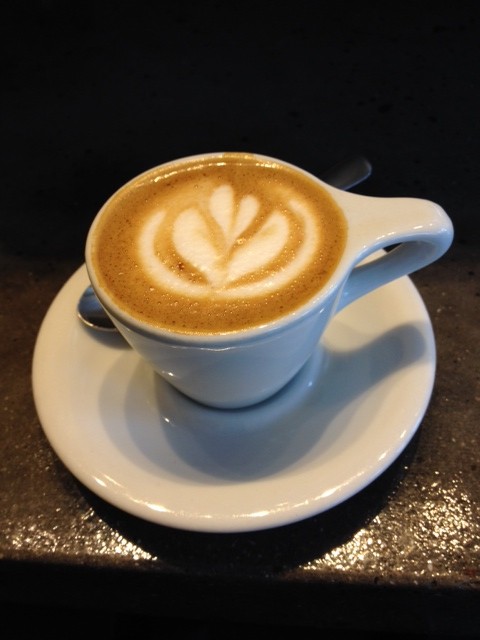
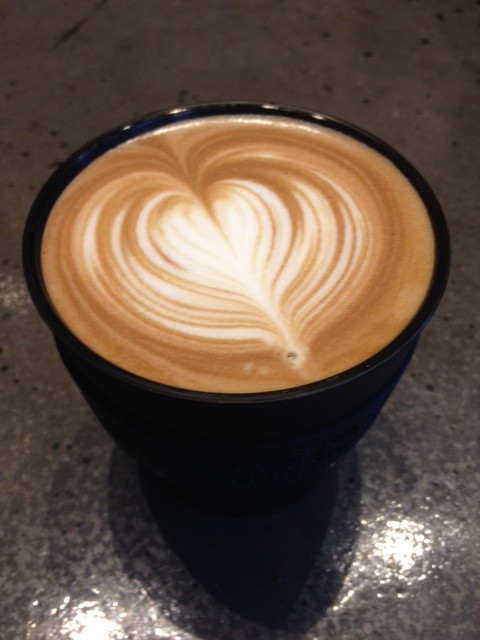
There’s also some really good coffee here. The first day, we hit Biggby’s Coffee. It wasn’t bad – better than average coffee, but nothing life changing. The second day I went to Madcap Coffee. If I could, I would teleport there and back every morning from now on. I would marry their machiatto, but polygamy isn’t legal in Michigan or Tennessee. I wasn’t the only one either – fellow drinkers would note the cups held by other attendees and simply raise them up and wordlessly acknowledge the religious experience we shared.

madcap mmm

Also a great art museum. More on that in a moment.

Impressed with the pre-conference work

Every point of contact I had with the conference was well designed, well managed and question-free. Seriously. I had no questions after reading the website. Signing up for the conference triggered confirmations, friendly advice about the city and venues, and timely reminders and new info via email and the website as it became available.

Impressed with the conference logistics

Again, no questions. No drama. No issues with instructions, with missing presenters, with spotty Wi-Fi, or unclear directions. There were volunteers stationed for maximum effect to direct foot traffic between buildings and events, signage up everywhere you could need it to be, and things ran on time across the board. It was almost spooky.

The food and beverages provided at certain points were fresh, plentiful, tasty, and served with 100% recyclable or compostable materials. There was next to no waste produced by this event.

The sessions and workshops themselves comprised a nice mix of disciplines and interests, though I had a couple hard decisions to make.

Session notes

Thursday
I missed a great workshop on drawing communication practices by MJ Broadbent, but enjoyed a workshop on design practice led by Matt Nish-Lipidus. Given the simple task of coming up with a clock that describes one’s relationship to time, there was a surprising variety in what our breakout teams came up with.

Since I covered all costs myself versus having the conference/travel paid for by my company, I opted to only do one workshop. After lunch I headed to the GRAM, or Grand Rapids Art Museum. There I enjoyed the permanent collections as well as a few remnants from the ArtPrize event they apparently have each year in Grand Rapids. There’s a very well put together art library within the museum as well.

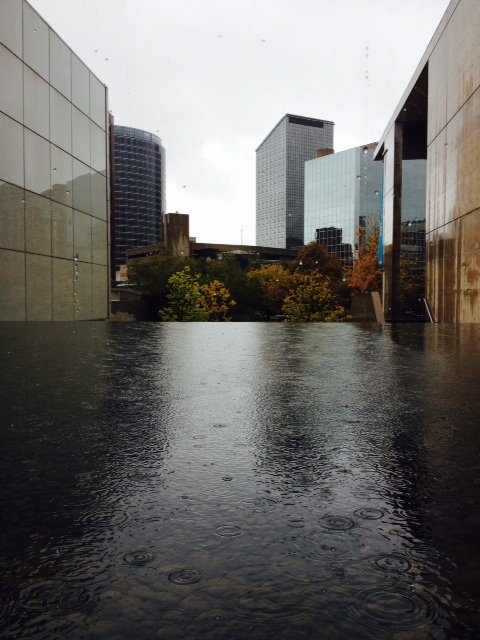
GRAM reflecting poolGRAM stairway

Friday
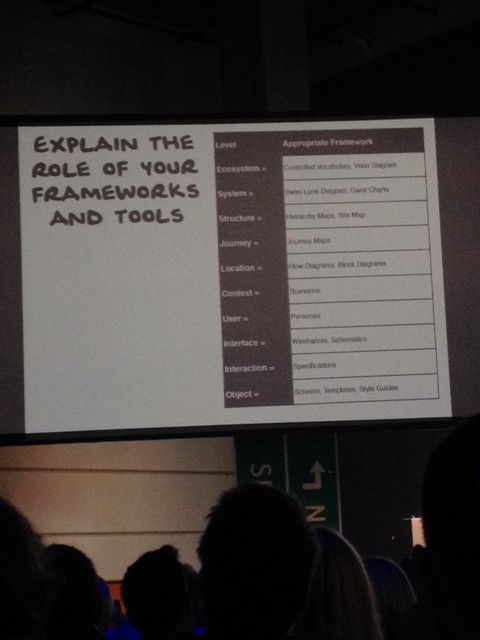
Abby Covert’s keynote on “Making Sense of Place” did not disappoint. I’d heard a bit about her, and I can see how she’s got the reputation of being a smart, kind, and energetic designer and presenter. Her talk focused on relating IA (information architecture) specifically and UX as a whole to the theme of ‘place’, and place making. Aside from her amusingly caffeinated story, she presented a hierarchy of terms to make sense of a given design challenge, and how to zoom in and out of that hierarchical framework to gain insights. Ecosystem to Object – from a simple object like a button up to a complex collection of systems like a large pharmaceutical company.

Hierarchy - making sense of place

Dude, Who Stole My Community
Charles Erdman led an interesting session that focused on how our developing technology and our dependence/addiction to it has effected our sense of community. From I Forgot My Phone to stories of how technology helped keep communities in touch during the recent Colorado flooding, he made some good points for designers to consider carefully when using and building future products and systems.

After orientation: making room for a novice UX designer
Megan Schwartz had a lot of really sensible things to say about how organizations can better support (and learn from) novice designers. Some of it was common sense (though not necessarily practiced in the workplace very often) but her insights into the ways novices can turn the tables and really help a company out were interesting. As a manager myself I took away some notes I intend to put into practice. Good job, Megan!

Excursion
I joined a gaggle of folks and we soon arrived at GRID70, a coworking space shared by a number of non-competitive companies with roots in Grand Rapids. Here’s the description:

GRid70 is currently the world’s largest experiment in coworking which brings innovation and strategy teams from Steelcase, Amway, Wolverine Worldwide, and Meijer together in shared spaces. This Excursion focuses on ways space can be designed to create the “happy accidents” of collaboration essential to fostering new work structures and inter-industry collaboration. The participants will engage in a conversation about Grid70 – what it is, how it works, and the challenges it addresses. The Excursion will culminate with an exercise to expand the concepts discussed and deconstruct a proposed experience solution.

First we talked about the space itself, the groups working there, and the mindset that brought it all together. Then we toured the building, poked around the collaborative workspaces, and generally grew quite jealous of their marvelous workspace. Finally we got back together and tossed around ideas on how to achieve a sense of community in Amway’s international physical storefronts – designed to be a coworking space, a distribution point for merchandise and a support structure for the independent business owners. It was a fun outing to be sure.

a walkway - brought to you by Dr. Whostickies as far as the eye can see

Keynote #2 by Christina Wodtke
Another well-known figure in the UX community, Christina had some nifty insights to share about Place. For one, stop thinking purely in terms of how you as a builder are creating spaces. Stop and think about how places make you. Places, communities, heartlands.

Another insight was to consider carefully how a user’s speed of browsing should be consciously designed for… on a social site’s homepage when NOT logged in, you might design for high speed ingestion – users will likely only see the page for a brief moment and can scan a well designed page quickly to find what they need. Contrast this with a comments feed from friends – this highly dense information must be put together so that one’s low speed browsing experience is optimized. If the internet is our new third space (since bowling alleys are nearly extinct and not everyone likes Starbucks), what is the internet’s heartland?

Saturday

In the morning, Christina chaired a panel (you’ll see what I did there in a sec) with design leads from Steelcase, Herman Miller and Haworth. Each had brought a chair with them (and sat on it for the duration) that exemplified the design philosophy their company was known for. It was rather cool seeing three competitors on the stage at once, sharing some challenges and some lessons learned that they found they had in common. Everyone in the crowd wanted those chairs… badly.

Lunch was served, and some of us chose to take in some quick lightning sessions in a format called Pecha Kucha. I caught three of them, and resolved to take part the next time we have a Pecha Kucha night in Knoxville.

Pecha Kucha

After lunch, I took in a thought provoking session about the Essence of Experience (Design can be dangerous), and another on how “The Place You’re In Is More Than The Place You’re At” by Phillip Hunter.

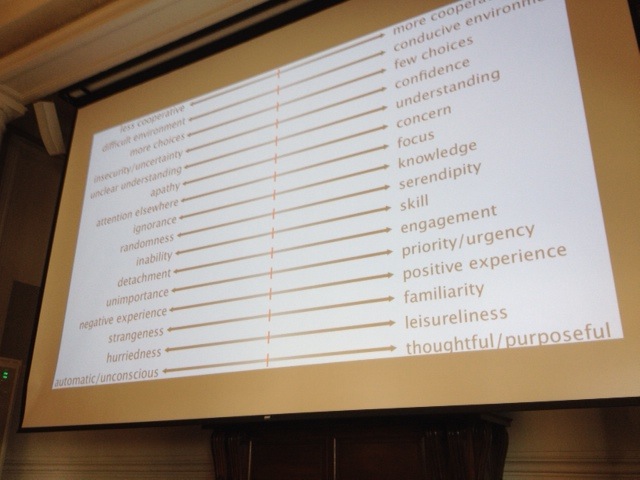
A takeaway for me was Phillip’s comprehensive list of different continuums – a sliding scale indicating ‘more’ or ‘less’, ‘hot’ or ‘cold’ as related to user experience evaluations. This isn’t a list of good and bad, just a way to think about a product or service to ensure you’re designing with the right factors in mind. Stay tuned for tweaks to this – I think he said it was still in beta 🙂

photo 3

Finally, the closing keynote began, featuring Karl Fast. I had the pleasure of sharing lunch with Karl and two other gentleman before the excursion to Grid70, and his insights into the state of UX education, MOOCs, and technology trends had me wishing we could have a longer lunch.

Karl’s talk led from physics to astronomy to electronics to biofeedback to data. BIG DATA is all well and good, but Karl exposed us to the idea that SMALL DATA is where we as designers can build experiences and leverage the growing sea of data to improve the lives of individuals, at a local scope, in real and measurable ways. He’s a great speaker and a very sharp fella.

The conference closed out with credit to volunteers, sponsors, organizers, and attendees. Lots of genuine applause and positive feedback – (I wasn’t the only one to feel like the logistics for MidwestUX were flawless.)

I had a blast. It felt so good to talk design and experience again with folks from all over engaged in all sorts of roles. Invigorating, exciting… like a Zest commercial with empathy and a sense of place.

On the way out of the city, I dropped by to say a sad goodbye to my new sweetheart: goodbye, MadCap. And goodbye, Grand Rapids! I hope to see you in Indy next year, MWUX!

Madcap latte

Getting back in the saddle

It’s been some time since I redesigned Minotaurdesign.com. (2006, to be precise.) It’s been my business site since I had a business (1999) and it has gone through intense periods of work with much love/attention being paid to it – alternating with periods of inactivity.

I’m now coming off several years of letting the website sit untouched. If it mattered, I could point the finger at a number of things: parenthood, juggling the duties of a part-time landlord with a full time job, and feeling a lack of creativity fueled by having roles that put increasingly less emphasis on DESIGNING vs MANAGING, to name a few. Regardless, regret at having let the site sit idle does no good – so onward and upward!

As I gear up for a substantial redesign and some strategic shifts in focus, I have to credit a number of factors when looking at what has moved me to action:

  1. Recruiters

    I know what you’re thinking… recruiters? aren’t they the underbelly of our working world, constantly pinging you when you have no interest and making statements and promises that simply demonstrate their lack of any real knowledge about your chosen field…? Well, that can be the case, certainly.

    In my case, being contacted by one of the most influential companies for me on both a personal and professional level was an eye opening experience. When Apple first pinged me (via a well known business social media platform) I thought it was spam. After a bit of research I found the inquiry to be legit, which led to a number of conversations with recruiters and hiring managers on the west coast. The long and short of it was that our discussions led to one recurring observation:

    They felt I wasn’t solely dedicated to the discipline of front end development, and that I (still) seemed to harbor interest in the design side of the web.

    After much reflection, I realized they were right. With a background in illustration & advertising design, with a large side of fine art – I had to admit to myself that despite a full time job with an incredible company, serving terrific family-friendly brands, and working with amazing people – in the end i could not say I was fulfilled by the roles I’d held in recent years.

  2. Old friends

    In the first few years of my professional career I was part of a rapidly growing company that built multimedia sales platforms for auto dealers and which eventually turned into doing websites for automotive OEMs and dealer groups. Our team was home to a group of truly talented, passionate folks – many of whom are still in contact today. 2013 brought some significant career changes to three of those very influential friends from the early days:

    • One fellow had been out of the loop so long he no longer felt able to get back up to speed and took a retail job to pay the bills. He despaired of every returning to the web industry. This was a gentleman to whom myself and other young folks had looked up as an early adopter, a pioneer – with many different skill sets and a daunting intellect.
    • Another close friend was a renowned expert in his field, and a published author several times over. He was a trusted source for guidance in many forums over a number of years, a born teacher, and a truly remarkable human being as well. This friend had been a full time freelance developer for more close to 10 years, but his chosen area of expertise began to lose relevancy and his work dried up. He had to take a corporate job, and he too felt the pinch of having let his skills in many areas fall out of practice – easy to do in a world where innovation and major shifts in accepted practices happen all the time. In conversations over the course of the year, I had to admit I was very much in danger of falling prey to the same kind of threat.
    • A third friend, who some would have voted ‘most likely to remain a no-good punk for life‘, instead went on to consistently make wise choices in the roles he took on and the contacts he made in the industry. He adopted an attitude of humility and eagerness to learn, and was rewarded by the well-earned regard of his employees, employers and peers. His path remained aligned with his core values, with the things he’d grown to value: open, clear communication, advocacy for the users of the products he touched, and the courage to call BS when necessary. This year brought an amazing opportunity for him and his family, and hearing the joy he found in continuing to pursue his chosen path was encouraging to say the least.

  3. Family

    My family has been supportive over the years – grateful for the extra income my work has brought in under the Minotaur Design banner and happy that I was content in my work. It’s been obvious in recent years that I was left somewhat incomplete by the roles I’ve held by day, and my family has urged me to indulge in creative outlets while remaining understanding when I didn’t feel I had the energy or will to do so. My wife and daughter are the subject in many portraits done over past years, and so too are they supportive of my desire to steer back towards more creative professional roles.

  4. Twitter

    I admit it…

    I didn’t really GET Twitter when it launched. In fact, I didn’t really get it for years. It didn’t help to have set my privacy settings to “Ostrich with head in sand” when I initially signed up.

    Not until somewhat recently did I awaken to the second-by-second stream-of-consciousness zeitgeist that Twitter had become. Taking part in active conversations with other designers, developers and assorted experts has been at once humbling and exhilarating. Keeping up to date via blog entries and published articles has gotten harder year by year, and I’m starting to see how much more accessible it is to use tools like Twitter to stay abreast of the always changing world of the wide, wide web.

There are so many more choices available today than when I last redesigned the site. It used to be you simply coded out your design from scratch, did some testing with friends, peers and prospective clients, and breathed a sigh of relief when it was done and you could get back to paying work.

These days there are a lot of factors to juggle:

  1. Goals: Are you building the site to get new business? To show off your chops in hopes of scoring a plumb day job? To demonstrate hard-won expertise and hawk your latest book, seminar or conference tour?
  2. Platforms: Are you building from scratch or Using a publishing platform like WordPress or Drupal and/or relying on a framework like Bootstrap or Foundation?
  3. Deployment methodologies: Are you pushing everything up to your server manually via FTP, or are you using advanced IDE software, employing enhanced workflows, and jumping through the hoops of Node.js, NPM and Gruntc?
  4. Stylesheets: Still writing your CSS the old fashioned way? Pull up a stool and skill up on dynamic stylesheets: LESS, SASS, mixins and varying levels of automation wired any which way.
  5. Speed: Do you have site performance in mind? Think it’s still enough to just watch the filesize of your jpeg files? Are you loading all your script and style assets for every page, or building things in a modular fashion and only loading what’s needed, ala Require.js, Yepnope, or LabJS?
  6. SEO: It’s not enough to have a nice website these days. You’ve got to have it set up so it’s searchable, relevant, semantic and well-liked (well-linked). You may even have to pay for some exposure – SEO isn’t enough, SEM to the rescue.
  7. Research: Operating on hunches about what your users are doing? No bueno. You’ve got to wire up your site to some analytics – get some real insight into traffic patterns, user behavior, and the effectiveness of your marketing efforts.
  8. Marketing: What, you’re not doing much marketing? Too bad, you just lost the first round. Many FREE and PAID options abound, from Facebook and Twitter to LinkedIn, Tumblr, Quora, Pinterest and more. Seperating the signal from the noise is part of the challenge, as is learning to employ your research in focusing your marketing efforts.
  9. User Experience: Great, you’ve got users on the site. Now, CAN THEY USE IT? Usability was a concern back in the day, but now it’s become an increasingly important discipline to practice, and one that relies on many of the prior factors – research primary among them. Is your content organized well? Does the visual design enhance or obstruct your message? Can your users follow the desired courses of action you’ve laid out for them? Are your objectives served by each and every choice you’ve made along the way?

All of this is enough to induce a case of decision paralysis – but I’m powering on.

I’ve finally rediscovered the passion I felt in the early days of designing for the web, and I can’t wait to find out what comes next.